
| Types of Rock | | | Properties | | | Volcanoes | | | Articles |
Vanadinite
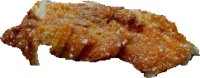
| Chemical Composition: Pb5(VO4)3Cl | |
| Group: Vanadate |
Hardness: 3 |
| Colours: brown, brownish yellow, brown red, colorless, yellow | |
| Streak: brownish yellow |
Density: 6.7-7.1 |
| Luster: Adamantine |
Cleavage: None |
| Acid sensitive: yes | |
Vanadinite is a lead chlorovanadate with the chemical formula Pb5(VO4)3Cl. It is 73.15% lead, 10.79% vanadium, 13.56% oxygen and 2.50% chlorine. Vanadinite is part of a chemical series which includes two other minerals, Pyromorphite (Pb5(PO4)3Cl) and Mimetite (Pb5(AsO4)3Cl). This series is a little different to most chemical series, which involve the substitution of cations such as calcium for magnesium. Instead, the Vanadinite series substitutes in its basic chemical units the anion groups; phosphate (PO4), arsenate (AsO4) and vanadate (VO4). Vanadinite is usually red or brown/orange red with a high luster which appeals to mineral collectors.
The mineral was first discovered in Mexico in 1801 by the Spanish mineralogist Andrés Manuel del Río. He called it "brown lead". His first thought was that the newly-discovered rocks contained a new element, but then he changed his mind and decided that what he had found was in fact an impure version of chromium. In 1830 Nils Gabriel Sefström, working independently of Andrés Manuel del Río, discovered Vanadium. It was later demonstrated that this Vanadium was indeed the substance discovered earlier by Andrés Manuel del Río and so his 'brown lead' was renamed Vanadinite because of the high content of the new element.
As well as Mexico, Vanadinite can be found in Arizona, USA, Tsumeb, Nambia; Zambia; and South Africa. Vanadinite is an uncommon mineral formed by the oxidation of lead ore deposits such as galena and other primary lead minerals. This is why it is referred to as a 'secondary' mineral. Vanadinite is often associated with barite, limonite and wulfenite. Common impurities in Vanadinite include phosphorus, arsenic and calcium, where these may act as an isomorphic substitute for Vanadium. (The word 'isomorphism' applies when two complex structures can be mapped onto each other. In other words they are identical in structure) . Vanadinite has a high amount of the arsenic impurity is known as endlichite.
Vanadinite belongs to the apatite group of minerals. It shares the same structure with apatite and the two share similar crystal shapes. Each structural unit of Vanadinite contains a chlorine ion surrounded by six divalent lead ions at the corners of a regular octahedron, with one of the lead ions provided by an adjoining Vanadinite molecule. Like all lead minerals, the crystals always show a high luster. Because of its high content of lead (Pb), Vanadinite also has high specific gravity, making it a heavy mineral.
The best field indicators of Vanadinite are its colour, crystal habit, high luster and high density.
Vanadium is a soft, silver-gray metallic element used in metal alloys. It is important in the aerospace industry for the production of titanium alloys. A common process for extracting the Vanadium begins with the heating of Vanadinite with sodium chloride (NaCl) or sodium carbonate (Na2CO3) at about 850°C to produce sodium vanadate (NaVO3) which dissolves in water. Soluble sodium Vanadate is then treated with ammonium chloride to give an orange coloured precipitate of ammonium metavanadate. The precipitate is melted to form a crude form of Vanadium pentoxide (V2O5). The latter under reduced condition with calcium gives pure Vanadium.
 |
| Rocks in Focus |
© Biscuit Software 2016